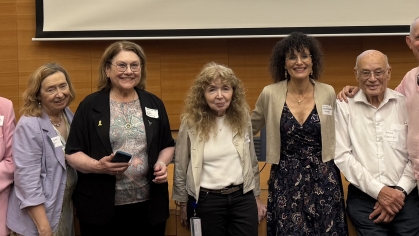
A Rutgers-led conference on Alzheimer's disease held in Tel Aviv, Israel, earlier this month provided a platform for leading researchers and students from both the United States and Israel to share their latest findings on understanding, preventing, and treating Alzheimer's.
Rutgers-Newark researchers have released a first-of-its-kind report on how gentrification is—and isn’t— playing out in three mid-sized New Jersey cities: Newark, Paterson and Jersey City.
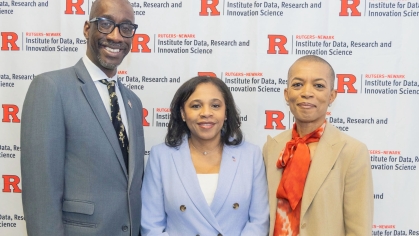
Rutgers-Newark announced the launch of the Institute for Data, Research and Innovation Science (IDRIS), a groundbreaking effort that explores how AI and other technologies can improve healthcare, education, public safety, and other aspects of community well-being.
Alzheimer’s early detection tests using video games developed by Rutgers-Newark researchers may help spot the disease years before symptoms are noticeable and provide a non-invasive form of dementia screening.
Two Rutgers-Newark chemistry experts are among a nationwide group of 42 scientists who received a total of $31 million in federal funding from the United States Department of Energy (DOE).
The AI algorithms increasingly used to treat and diagnose patients can have biases and blind spots that could impede healthcare for Black and Latinx patients, according to research co-authored by a Rutgers-Newark data scientist.