Rutgers-Newark Receives National Recognition With Carnegie Classification for Community Engagement
Rutgers University–Newark is among 237 U.S. colleges and universities nationwide to receive the Carnegie Community Engagement Classification for 2026, which recognizes institutions that excel at integrating community engagement across teaching, research, and service.
Rutgers-Newark has held the classification since 2010 but institutions must reapply every five years to earn a designation for the next cycle. The 2026 designation reflects the university’s ability to demonstrate deep, sustained engagement over time.
Granted by the Carnegie Foundation for the Advancement of Teaching, the designation reflects Rutgers-Newark’s longstanding collaboration with community organizations, local schools, government agencies, and civic leaders to advance social impact and economic development in the city and the surrounding region.
Last year, Rutgers-Newark also received a Carnegie Classification as an Opportunity College and University, a category created for the first time to recognize schools that excel at helping economically disadvantaged students find careers that pay competitive wages.
For the past 19 years, the Community Engagement classification has served as the leading framework for institutional assessment and national recognition of community engagement in U.S. higher education.
“Our colleges and universities not only fuel science and innovation, they build prosperity in rural, urban and suburban communities nationwide,” said Timothy F.C. Knowles, president of the Carnegie Foundation. “We celebrate each of these institutions, particularly their dedication to partnering with their neighbors — fostering civic engagement, building useable knowledge, and catalyzing real world learning experiences for students.”
Institutions that received the designation in 2026 joined 40 classified in 2024, for a total of 277 institutions nationwide. A complete list is available here.
“We are proud to have our community-engaged mission reaffirmed by the Carnegie Foundation. This redesignation is evidence that our faculty, staff and students remain true to our goal of building reciprocal partnerships with the communities we serve and co-creating knowledge that is impactful and responsive to societal challenges,’’ said Rutgers-Newark Chancellor Tonya Smith-Jackson.
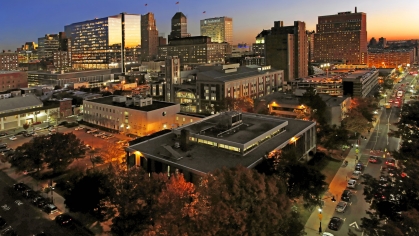
Rutgers-Newark’s role as an anchor institution in the city is key to its mission. Faculty, staff and students have increased the rate of college-going residents, increased local hiring and procurement rates, improved public health, and teamed with local artists and cultural institutions to create socially engaged public art projects.
“For Rutgers–Newark, earning the Carnegie Community Engagement Classification affirms that community engagement is not just an activity, but a core institutional commitment—integrated into teaching, research, and civic life to create lasting, reciprocal impact,” said Diane Hill, Assistant Chancellor for the Office of University–Community Partnerships, which led the data collection and preparation of the application. “Community partnership is central to who we are, how we learn, and how we serve.”
Hill noted that that earning the designation was an effort that spanned all six schools at Rutgers-Newark, as well as multiple offices, centers, and institutes. The classification is awarded following an intensive, evidence-based self-study process.
Factors considered by the Carnegie Foundation include institutional culture, faculty and staff support, curricular and co-curricular engagement, civic learning, student life, and institutional investments. In addition, 12 community partners were surveyed to assess the depth and quality of their partnerships with the university.
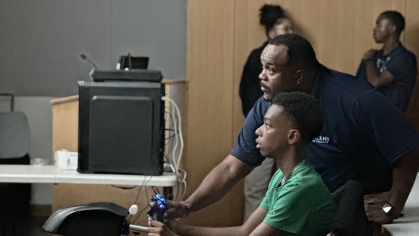
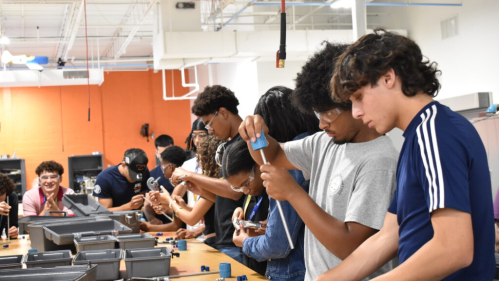
Some of the programs and research initiatives that were highlighted to support the designation include the Newark Public Safety Collaborative, which partners with the City of Newark and community stakeholders to improve public safety through data sharing and coordinated strategies; Rutgers Law School’s clinical partnerships with the New Jersey Consortium for Immigrant Children; and the Center for PreCollege Programs, which serves more than 2,000 students annually in grades 6–12, strengthening college access and career pathways.
Public health and workforce initiatives featured in the application include Advancing Health Literacy to Enhance Equitable Community Responses to COVID-19, a partnership with the City of Newark and the U.S. Department of Health and Human Services; the Newark Geoscience Ecosystem, which supports the development of a diverse geoscience workforce; and the Rutgers–Newark Aging & Brain Health Alliance, which works with community partners to educate older African American residents in Greater Newark about dementia and Alzheimer’s disease.
“The institutions receiving the 2026 Community Engagement Classification exemplify American higher education’s commitment to the greater good,” said ACE President Ted Mitchell. “The beneficiaries of this unflagging dedication to public purpose missions are their students, their teaching and research enterprises, and their wider communities.”