Program for First-Generation Graduate Students Fills Gap
Nationwide, first-generation undergrad students are increasingly being recognized for the challenges they face navigating college as the first in their families to seek higher education.
First-generation graduate students--defined as the first in their families to earn undergraduate degrees and pursue graduate studies--often receive less support, and have a different set of dilemmas. There’s the pressure to land jobs right out of college so they can help support family members, who don’t always understand the value of graduate degrees or the significance of their research.
Others have difficulty adjusting to an environment where many fellow students come from families with advanced degrees and have knowledge and networks that give them an advantage. And often, there is less of a financial safety net, especially since the families of first-generation grad students typically have less wealth than families of degree holders.
That’s why Rutgers Graduate School-Newark has started a new program for first-generation graduate students. Dean Taja-Nia Henderson, who was a first-gen student herself, knew from her own trajectory–and from listening to students and alumni–that there was a need. Supported in part by an Innovation Fund Grant from the university’s Educational Equity and Excellence Collaborative, the Graduate School’s program is the first of its kind at Rutgers.
“All of these people were sharing their experiences and how difficult it is to visualize success when you haven’t seen it up close,’’ said Henderson, a Rutgers Law School professor who holds a doctorate in History as well as a law degree. “In a way, they don’t feel seen. They don’t feel that this type of path is as valued as their undergraduate path.”
The program, which began earlier this year, convenes faculty, alumni and guest speakers to connect with graduate students, share resources, network, and offer advice. They also get support in shaping their professional identity, including a sponsored portrait session for professional headshots.
“It’s important to connect with others so our students can meet more people who have done this work, or just find a sense of belonging,’’ said Henderson.
One of the most pervasive misunderstandings about graduate degrees is that unless a student aims to become a doctor or lawyer, such degrees can be a waste of time and money, said Henderson.
“We see doctors and lawyers in movies and on TV all the time. But we don’t see sociologists. We don’t see chemists, unless they work for cops. Those aren’t the type of professional paths that become a part of our socialization, so there’s less knowledge,’’ she said.
But studies have shown that advanced degrees eventually lead to higher incomes.
“People with graduate degrees outearn those without grad degrees, year after year,” said Henderson.
At a recent luncheon for graduate students, Rutgers-Newark Interim Chancellor Jeffrey Robinson shared his own journey as a first-generation graduate student.
After earning his bachelor’s degree in engineering from Rutgers, Robinson assumed he would enter the workforce. Instead, an employee at the company where his father worked suggested graduate school. Robinson went on to get a masters in Science and Civil Engineering Management at Georgia Institute of Technology.
Although he later landed a well-paying job in his field, Robinson left to pursue a doctorate after his father, an electrician and lifelong “tinkerer” who never earned a college degree, saw an ad for the PhD Project--a national organization working to increase the diversity of business school faculty--and shared it with his son.
His mother wasn’t so sure. “She was more risk-averse,’’ said Robinson. “She said, ‘you’re leaving a good job to go do that?’”
At Columbia University Graduate School of Business, where he received a master’s degree in Philosophy and a doctorate in Management, many of Robinson’s peers were more familiar with graduate school life. For some, their family members had advanced degrees. Unlike Robinson, others hadn’t left school to take full-time jobs before and during graduate school.
“Compare that story to some of the folks who were in the PhD program with me,’’ he said. “Their father and grandfather were professors. Or they went through four years of undergrad and then worked for a professor as a researcher. That was their path. I wouldn’t have even known what that path was,’’ he said.
The support of others in the PhD Project was crucial in helping him through. “It connected us to people around the country. It was the network I needed. I don’t know how I could have done it without that,’’ he said.
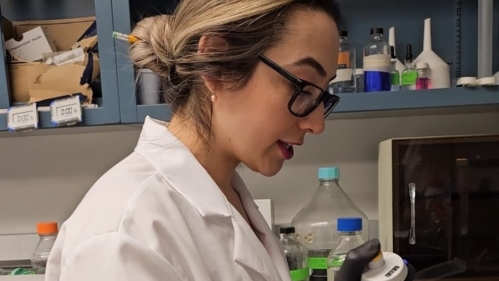
Luisa Fernanda Gomez-Alatorre, a first-generation Rutgers-Newark graduate student earning her doctorate in neuroscience, said her family was supportive of her attending graduate school. However, the “grind culture” of academia was not easy for her.
“You’re not truly aware of how much time and energy you will have to invest; what that means and how that’s going to impact you and those around you,’’ said Alatorre. “You have to figure out a system for yourself: how you study, how you learn, how you organize your life to fit this kind of lifestyle, and balance the rest of life’s demands while you’re at it.”
An erratic schedule that may seem flexible to others but cuts into personal time with friends and family is another aspect of grad school that those who haven’t experienced it can’t easily understand, said Alatorre.
“I would get, ‘why do you have to work holidays, evenings and weekends?’’’ she said. Or, “you’ve been going to school for over 10 years now, are you ever not going to be in school?'”
“Among families that haven’t gone to college, pursuit of the undergrad degree is regarded as a thing of value, but not the pursuit of graduate study, especially because multi-year grad programs take people out of the workforce,’’ added Henderson. “It’s hard to explain the rigors and the length of a PhD program to people who might have no concept of the value of academic research.’’
Given her own experiences with trying to help her family and friends understand her choice for an advanced degree in scientific research, Alatorre is thankful for the graduate school’s new initiative. “I think it’ll be a space where people with similar struggles can meet and interchange ideas, resources, and provide mutual support,’’ she said.


