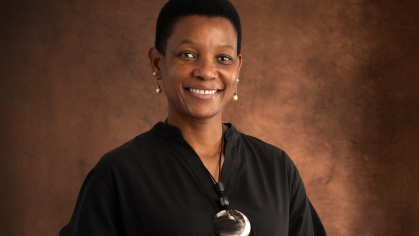
'Pose' Star Dominique Jackson Urges Families to Embrace Trans Loved Ones at Screening of ‘I’m Your Venus’
At a time when the trans community is facing a backlash, the story of Venus Xtravaganza–one of the most compelling figures in the milestone documentary Paris is Burning–illustrates what’s changed, and what’s remained the same, since the film was released in 1990.
Venus was murdered at age 23 before the release of Paris is Burning, which chronicles queer ballroom culture. The case remains unsolved. But her life, and the efforts of her brothers to find answers and gain a better understanding of their sister, is explored in I’m Your Venus, a documentary released last year.
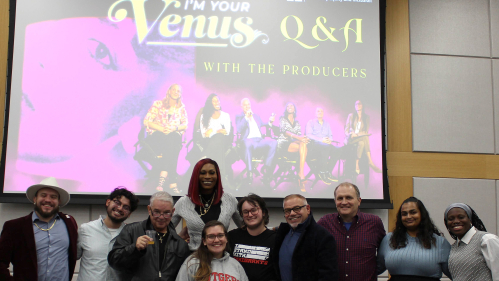
A screening of the film at Rutgers-Newark, sponsored by the Intercultural Resource Center, culminated in a panel discussion between two of Venus’s brothers, John and Joe Pellagatti, Dominique Jackson, the star of Pose and the film’s producer Mike Stafford.
Venus, who was born in Jersey City, was a star of New York City’s ballroom competitions, where fellow members of the House of Xtravaganza became her chosen family. She hoped to become an actress and model and eventually settle down in a home with a white picket fence.
The message of the film, which was directed by Kimberly Reed, is aimed at family members of trans people, who often shun and ostracize them, said Jackson, who is the documentary’s executive producer.
“This is a letter to the many families who punish their child,” she said. “Their loss is now going to teach the world. This could be you.”
The Pelagatti brothers, who described themselves as “macho” guys, loved Venus, who they refer to as their sister, but struggled to accept her identity.
Her death helped them realize the many ways in which they were ignorant of her life as a trans woman and the community where she found a sense of belonging.
Their attempts at seeking justice for Venus, to honor her memory, and to connect with members of the House of Xtravaganza, who have lost others to violence, was a way for them to heal.
Joe Pellagatti described the experience as transformative. “For me it was inspiring because I wanted to know more about how my sister lived,” he said. “I knew a little bit about what she did but I was more fearful because of the times and the challenges she was facing every day. Being in NYC, it was difficult at that time being gay, let alone trans.”
John said he hopes the film compels families to rethink their relationship with trans relatives."Hopefully, a film like this will bring families together,” he said. “We weren’t the greatest of brothers. It was very difficult at that time—you’re worried about what your friends are going to say. I wish it could have been a better.’’
The brothers’ transparency and empathy is what gives the film its power, said Jackson. “This tells you it’s time to wake up. These are manly men, according to the construct. They’re saying, we see this, we understand it, and we wish we were better,’’ she said.
The film also documents the brothers successful effort to replace the “dead name” on Venus’s tombstone with the name she used at the time of her death, Venus Pellagatti Xtravaganza. The change established a legal precedent in New Jersey for others to do the same.
The Pellagatti family also worked with Garden State Equality and the House of Xtravaganza to have Venus’s childhood home in Jersey City declared a historic landmark, the first national landmark dedicated to a trans person.
“We collectively made history, all of us,’’ said John Pellagatti.
Since the documentary began filming, the brothers have formed a close bond with the House of Xtravaganza. “In my case, they’re like family. I have a relationship with the Xtravaganzas like I would with my brother Joe. I’m trying to make up the time with my sister,’’ said John Pellagatti. “You find out how talented and how intelligent they are—just amazing. It bothers me to know that they can’t be treated like everyone. It’s a nightmare.”
For Jackson, I’m Your Venus is fundamentally about compassion: “This film is important. It’s an educating piece that needs to be seen. It’s about being human. That’s it. It should be accessible to all of us.”