
Diversity

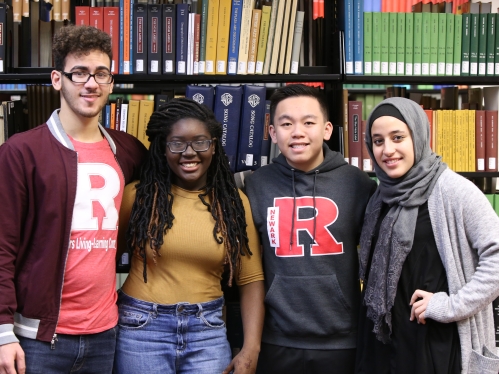
Since 1997, the first year that U.S. News & World Report began ranking colleges on the diversity of their student bodies, U.S. News has rated Rutgers-Newark the most diverse national university in the United States; no other school has been so recognized.
Does graduating from the nation’s most diverse school really make a difference in a student’s overall academic experience? Is it possible to assign an educational value to the racial, ethnic and religious diversity of a college’s student body?
A resounding “yes” is the answer from thousands of graduating seniors and alumni at U.S. News & World Report’s most diverse national university in the United States, Rutgers-Newark*. Every year hundreds of graduating seniors, responding to open-ended questions on R-N exit surveys, say that the diversity of the campus contributed profoundly to the quality of their Rutgers-Newark education. In fact, that aspect of their academic experience receives more positive comment than any other.
The same theme is sounded repeatedly from alumni, especially those who have graduated in the last decade. Those who have gone into the business world report that diversity is widely recognized as integral to business creativity in the global marketplace. They tell us that the experiences they gained here, working with people from so many different backgrounds, have given them a competitive advantage in their careers.

We want to help make your transition to college life as smooth as possible, and your college experience rewarding and productive.
News
Events

Quick Facts
Campus Overview
Founded: 1908
Joined Rutgers: 1946
Campus Size: 38 acres, 33 buildings
Interim Chancellor: Philip Yeagle
Undergraduate Majors: 40+
Graduate Programs: 20+ (JD, MA, MBA, MFA, MPA, MS, Ph.D.)
Athletics: 14 NCAA Division III women and men's teams
Libraries: 4
Enrollment (fall 2012)
Total: 12,011
Undergraduates: 7,666
Graduates: 4,345
Faculty/Staff
Full-time Faculty: 585
Faculty with Terminal Degrees: 99%
Full-time Staff: 770
Students
Male/Female Ratio: 50:50
Student/Faculty Ratio: 13:1
Nations Represented: 100+
On-campus Residents: 1,280
Carnegie Classification
Basic Type: Research Universities (high research activity)
Special Classification: Community Engagement